💔 What is SIDS — and how common is it in India?
SIDS (Sudden Infant Death Syndrome) is the sudden, unexplained death of an infant under 1 year of age during sleep, even after a thorough investigation finds no cause. It is the leading cause of infant death between 1 month and 12 months in most countries.
In India, estimated rates are 1–2 per 1,000 live births — lower than the US (3.4/1,000) partly because Indian families commonly co-sleep and maintain room temperature awareness. But the risk is not zero, and awareness in India is far lower than it should be.
Peak risk window: 90% of SIDS cases happen before 6 months of age. The peak is between 2–4 months — exactly when babies start sleeping longer stretches but before their arousal responses fully mature.
🛏️ The ABCs of safe sleep — every Indian parent needs to know these
The American Academy of Pediatrics (AAP) and WHO both agree on three fundamentals:
- 🅰️ Alone: Baby should sleep alone in their own sleep space — not in an adult bed or with siblings
- 🅱️ Back: Always place baby on their BACK to sleep, for every sleep, every time
- 🇨 Crib: Use a firm, flat surface — a proper crib, bassinet, or firm mattress with a fitted sheet only
These three alone reduce SIDS risk by up to 70%.
🇮🇳 India-specific SIDS risk factors
Standard SIDS guidelines were developed for Western homes. Indian conditions create specific risk factors that are rarely discussed:
| India factor | Risk | What to do |
|---|---|---|
| Summer heat (35–45°C) | ⚠️ Overheating is a top SIDS trigger | Keep room 20–22°C if possible; light cotton clothing only; no heavy swaddling in heat |
| Soft mattresses / charpoy | 🚨 High suffocation risk | Use a firm flat surface; no memory foam or thick padding under baby |
| Co-sleeping (sath sona) | ⚠️ 2–5x higher risk if adult is a smoker or had alcohol | Safe co-sleeping rules apply strictly — see below |
| Mosquito nets draped over crib | ⚠️ Can restrict airflow if touching baby's face | Keep net away from baby's face; use net on frame not draped directly |
| Kajal / surma near baby | ⚠️ Lead content; keep away from baby's face entirely | Do not apply any kajal to infants |
| Oil massage before sleep | ✅ Generally safe; avoid covering nose/mouth | Light massage is fine; don't massage face with oil then place prone |
😴 Safe co-sleeping rules for Indian families
We know co-sleeping is deeply embedded in Indian parenting culture. The goal is not to judge — it's to make co-sleeping as safe as possible if you choose it.
Co-sleeping is significantly safer when ALL of these are true:
- ✅ Neither parent smokes (anywhere, ever)
- ✅ Neither parent has consumed alcohol or sedating medication
- ✅ Baby is healthy, full-term, over 4 months
- ✅ Mattress is firm (not soft/memory foam)
- ✅ No heavy quilts, pillows, or bolsters near baby
- ✅ Baby sleeps on their back, not against your chest
- ✅ Baby cannot roll off the bed or get trapped between mattress and wall
Co-sleeping risk is MUCH higher if: parent smokes, baby is under 3 months, parent drinks alcohol, or baby is on a soft surface.
🌡️ Overheating — India's most underrated SIDS risk
Overheating is one of the most consistently identified risk factors for SIDS. In Indian summers, this risk is significant.
Signs your baby is too hot:
- Sweaty hair at the back of the neck
- Flushed, red cheeks
- Rapid breathing
- Feels hot to the touch on chest or back
Target room temperature: 20–22°C during sleep. If AC isn't available, use a fan to keep air circulating (but not blowing directly on baby). Dress baby in a single layer of light cotton.
Rule of thumb: Baby should wear one more layer than you're comfortable in — not two or three more.
📋 Complete safe sleep checklist for Indian parents
☐ Firm, flat surface — no pillow, quilt, bolster, or soft toy in sleep space
☐ Room temperature 20–22°C (use fan if no AC)
☐ Single light cotton layer — no heavy swaddling in heat
☐ Mosquito net not touching baby's face
☐ No smoking in the home or car, ever
☐ Baby in same room as parents (but own sleep surface) for first 6 months
☐ Pacifier offered at sleep time (reduces SIDS risk by 90% in some studies)
🚨 Warning signs during sleep that need immediate action
- Baby stops breathing for more than 20 seconds
- Baby is blue or grey around lips, fingertips, or face
- Baby is limp and unresponsive and cannot be woken
- Baby makes gasping or choking sounds that don't stop
📱 Does a baby monitor help prevent SIDS?
This is the most important question parents ask — and it deserves an honest answer.
No monitor can prevent SIDS. SIDS by definition has no warning signs that give you time to intervene. A monitor that alerts you when breathing has already stopped may not give you enough time for a meaningful response.
What monitoring does do:
- ✅ Reduces parental anxiety — which improves parental sleep quality and mental health, proven to reduce unsafe behaviours like taking baby into adult bed out of exhaustion
- ✅ Catches breathing irregularities early — conditions that aren't SIDS but are serious (respiratory distress, apnea events, SpO2 drops during illness)
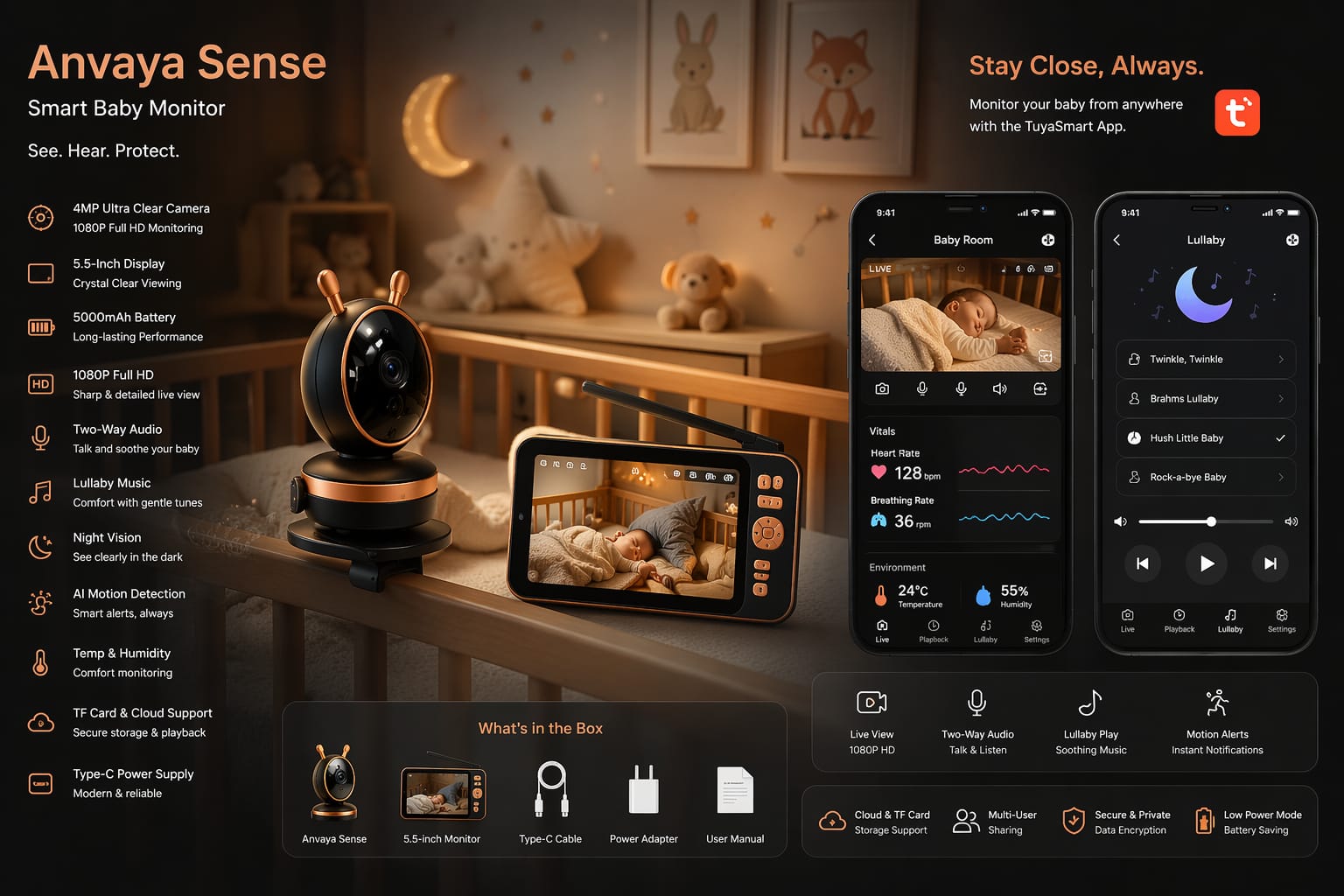
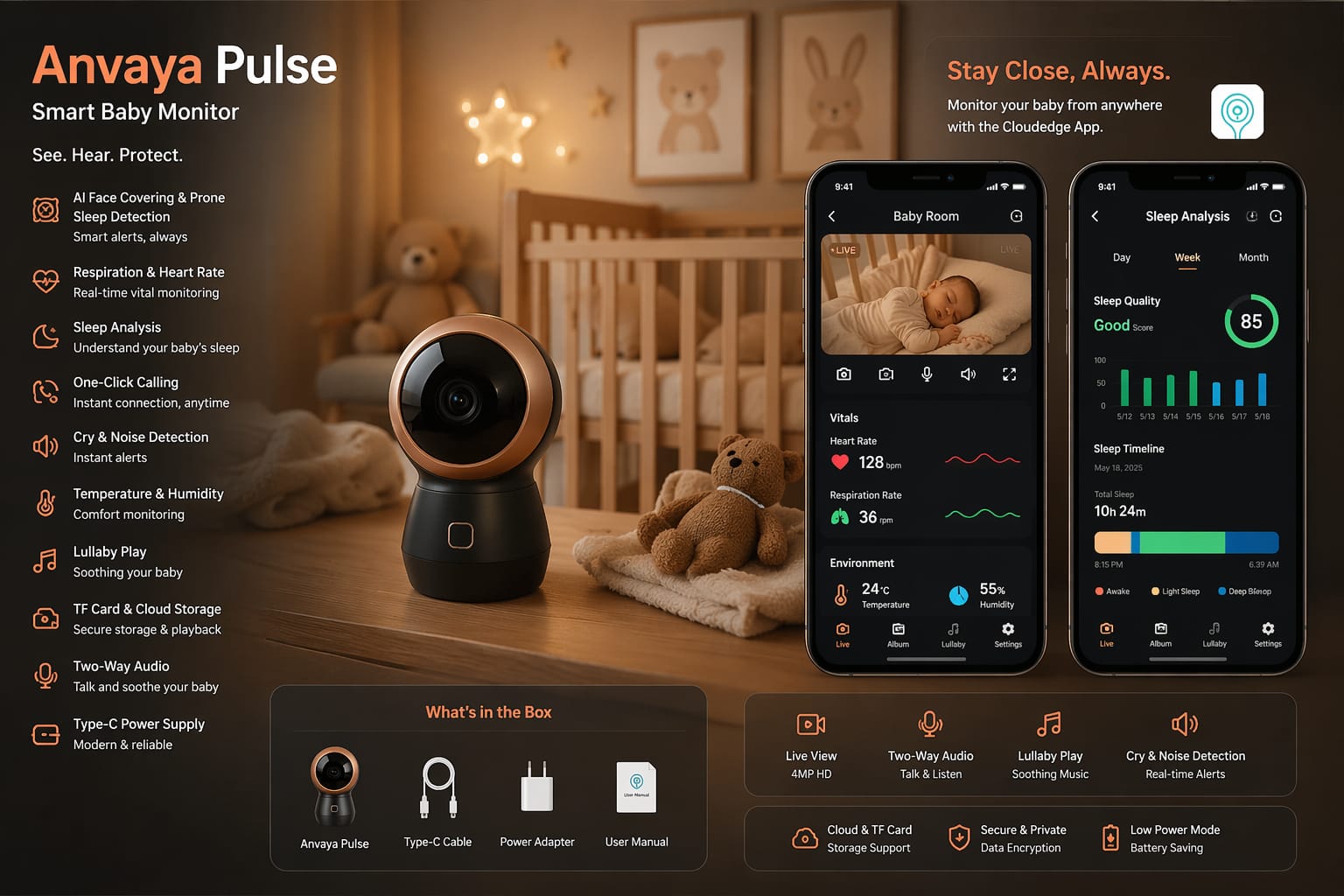
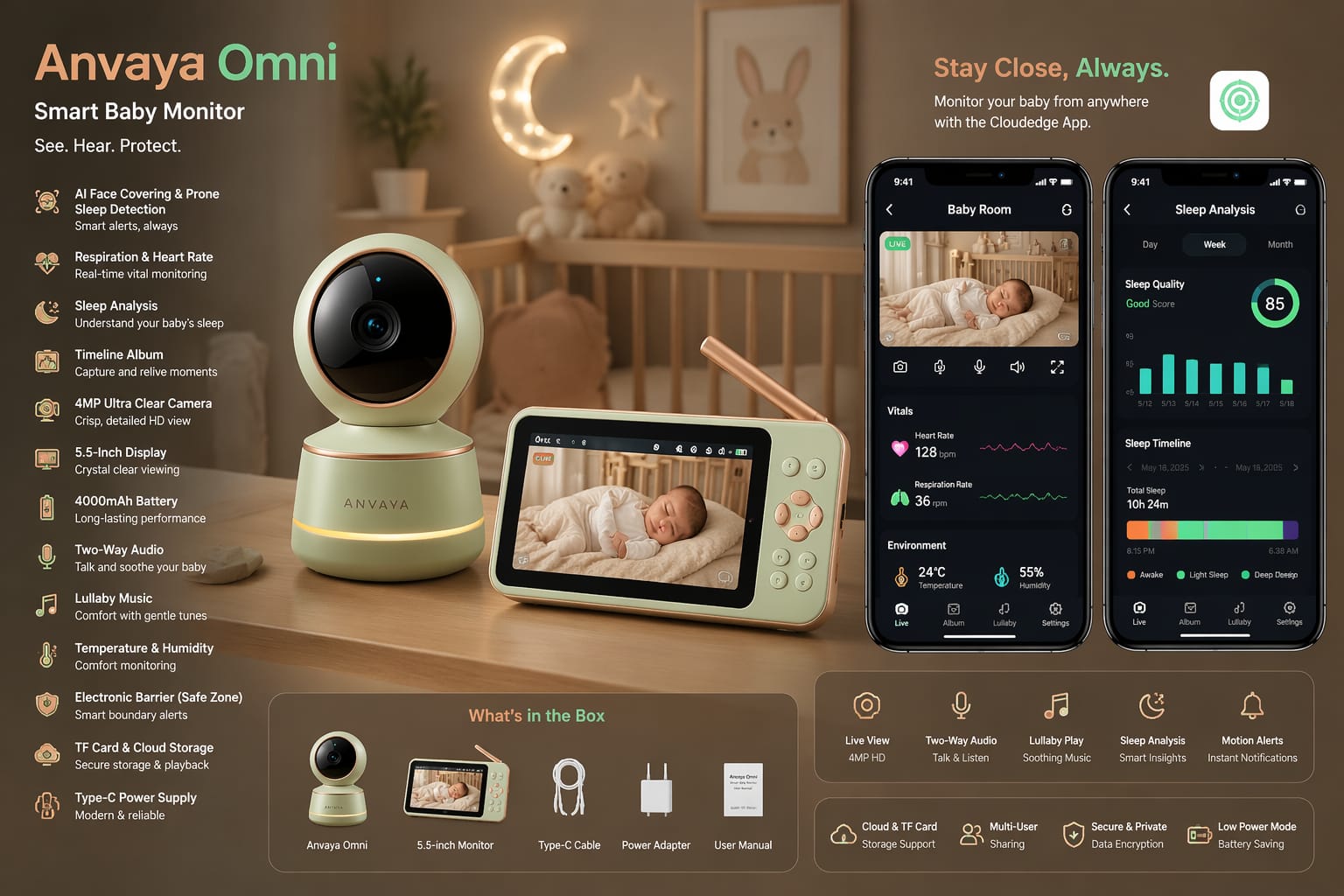
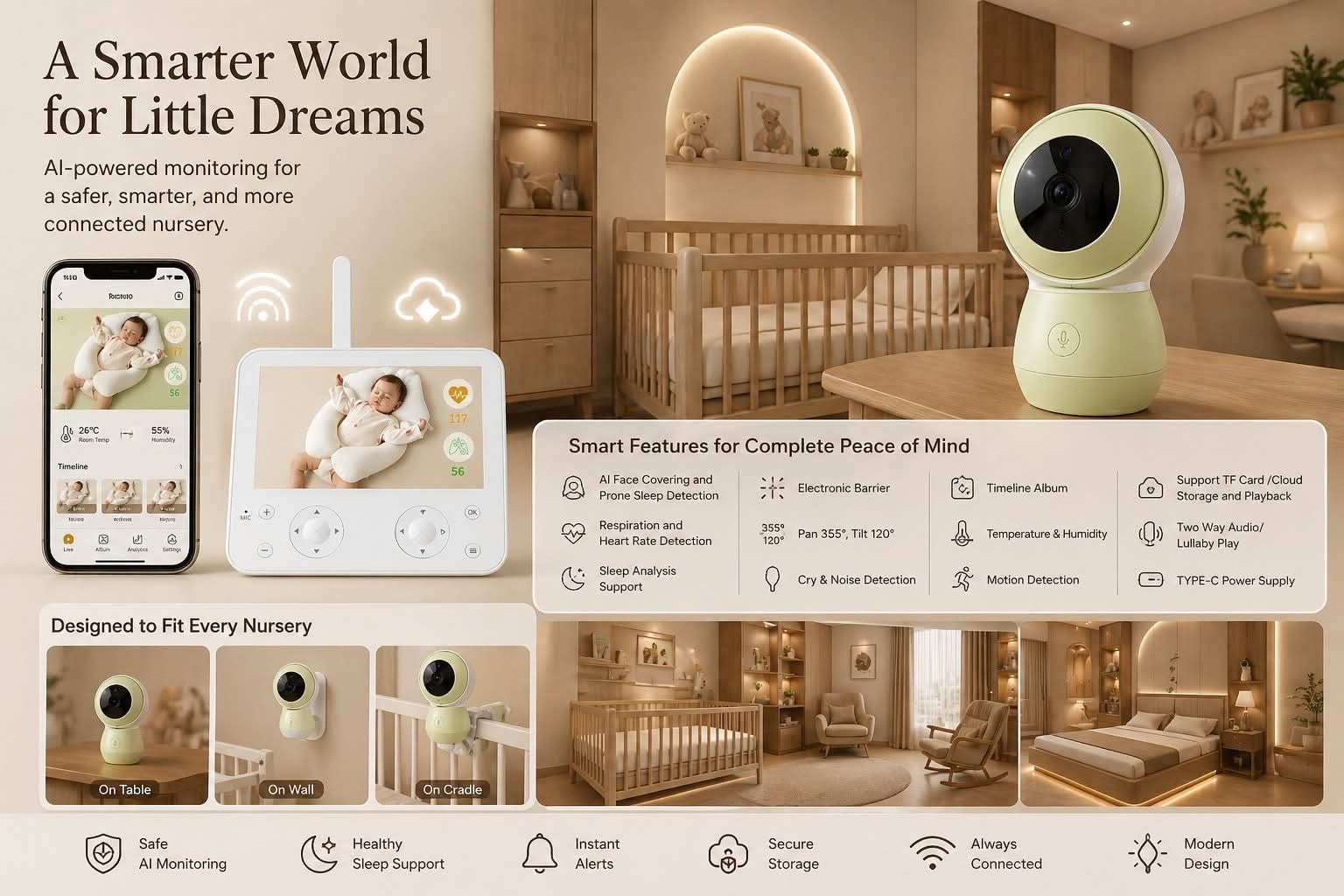
- ✅ Maintains room temperature awareness — Anvaya Smart tracks ambient temperature, alerting parents when room gets too warm during sleep
- ✅ Confirms safe sleep position — movement detection confirms baby hasn't rolled to a risky position
Monitor your baby with Anvaya Smart
India's only contactless AI baby monitor. Breathing, SpO2, cry analysis, sleep tracking. Starting ₹8,999.
Get Early Access — Save ₹7,000About the Author
A team of engineers and parents who built Anvaya Smart after experiencing first-hand the anxiety of monitoring a newborn. 7+ years in AI sensing systems. IIT research partnerships.