๐ŸผHungry cry detected94%โ†’
Baby Health6 min read
Last reviewed:

Baby SpO2 Monitoring: What It Is, Normal Ranges, and Why It Matters

SpO2 is one of the most important infant health indicators most Indian parents have never heard of. This guide explains what it is, what's normal, and how contactless monitoring works.

Anvaya Smart Team
Baby Wellness Researchers ยท IIT Research Partners
IIT ResearchAI Sensing Experts
Baby SpO2 Monitoring: What It Is, Normal Ranges, and Why It Matters
๐Ÿ’ก
Quick answer: what number should I look for?
Your baby's SpO2 should stay between 95โ€“100%. Below 94% for more than a few seconds = call your doctor. Below 90% = call 112. That's the whole thing in two sentences.

๐Ÿฉธ What is SpO2 โ€” and why should you care?

There's one number that every NICU nurse watches more closely than your baby's weight, temperature, or heart rate.

Most parents never hear about it โ€” until something goes wrong.

It's called SpO2 (say it: "S-P-O-2"). It stands for how much oxygen is in your baby's blood right now. Think of it like this: imagine tiny delivery trucks (red blood cells) carrying oxygen around your baby's body. SpO2 tells you what percentage of those trucks are actually loaded with oxygen.

100% = every truck is full. 95% = most trucks are full, still great. 90% = too many trucks are empty. Baby isn't getting enough oxygen.

In a hospital, nurses check this with a clip on your baby's finger. At home, most parents have no way to know โ€” they just watch and hope.

๐Ÿ“Š The numbers you need to know

AgeSpO2 readingWhat it meansWhat to do
Newborn (first 24h)95โ€“100%โœ… All goodNothing โ€” relax
Newborn (first 24h)90โ€“94%โš ๏ธ Watch closelyCall your doctor
Newborn (first 24h)Below 90%๐Ÿšจ EmergencyCall 112 now
1 month โ€“ 12 months97โ€“100%โœ… PerfectNothing
1 month โ€“ 12 months95โ€“96%โš ๏ธ MonitorNote the time, watch for 10 min
1 month โ€“ 12 monthsBelow 95%๐Ÿšจ Call doctorCall paediatrician now

One important thing: a single dip is not always dangerous. Babies dip briefly during active sleep. What matters is sustained low SpO2 โ€” meaning it stays low for 10+ seconds, happens repeatedly, or keeps dropping.

๐Ÿค” Why does oxygen level matter more than I thought?

Every organ in your baby's body needs oxygen โ€” especially the brain. Low oxygen for even a few minutes can cause problems. That's why it's the first thing doctors check in an emergency.

The sneaky thing about low SpO2: you usually can't see it.

By the time you notice blue lips (cyanosis), the situation is already serious. A monitor catches the drop well before it becomes visible. That's the whole point.

The good news: for most healthy babies in normal conditions, SpO2 stays perfectly fine all night. But for some babies โ€” especially premature babies, babies who've had any breathing issues, or babies recovering from illness โ€” knowing that number gives you real peace of mind.

๐ŸŒก๏ธ Why this is a bigger deal in India than most guides admit

Most SpO2 guides are written for Western parents. Here's what they don't mention:

  • Air quality ๐ŸŒซ๏ธ โ€” Parents in Delhi, Mumbai, and other high-pollution cities are right to think about respiratory health. Babies exposed to poor air quality are more likely to develop mild breathing issues, making SpO2 monitoring more relevant than it would be in cleaner air.
  • Altitude ๐Ÿ”๏ธ โ€” If you live in Shimla, Manali, or anywhere above 2,000m, normal SpO2 is naturally a little lower. The 95โ€“100% table above is for sea level. Ask your paediatrician for the right threshold for your location.
  • Heat and wearables ๐Ÿฅต โ€” Clip-on pulse oximeters (the kind you can buy for โ‚น500 at a medical shop) are designed for spot-checks, not overnight monitoring. In India's heat, they cause rashes, fall off during sleep, and can't alert you when you're asleep in another room.
  • No official Owlet in India ๐Ÿ“ฆ โ€” The most popular SpO2 baby monitor internationally (Owlet) is not sold in India. Importing it costs โ‚น40,000+ with no local support. Indian parents deserve a better option.

๐Ÿ‘ถ Which babies need SpO2 monitoring most?

Not every baby needs it. But it matters more for some:

  • โœ… Premature babies (born before 37 weeks) โ€” highest risk of breathing pauses
  • โœ… Babies who had a NICU stay โ€” their breathing is already being watched for a reason
  • โœ… Babies recovering from RSV, bronchiolitis or chest infection โ€” lungs need extra watching
  • โœ… Babies with a family history of SIDS
  • โœ… Any baby in the first 6 months โ€” the highest-risk window
  • โšช Healthy term babies with no complications โ€” lower priority, but peace of mind is still valid
๐Ÿšจ Call 112 immediately if you see any of these
  • Lips, tongue or fingertips turn blue or grey
  • Baby is limp, not responding, or very hard to wake
  • Ribs visibly pulling in with each breath
  • Breathing pauses over 20 seconds
  • SpO2 below 90% sustained

Want to understand what your baby's breathing rate means alongside SpO2? See our guide on normal baby breathing patterns. For a full picture of monitoring options, read baby breathing monitors without wearables.

๐Ÿฉธ SpO2 monitoring โ€” without anything on your baby
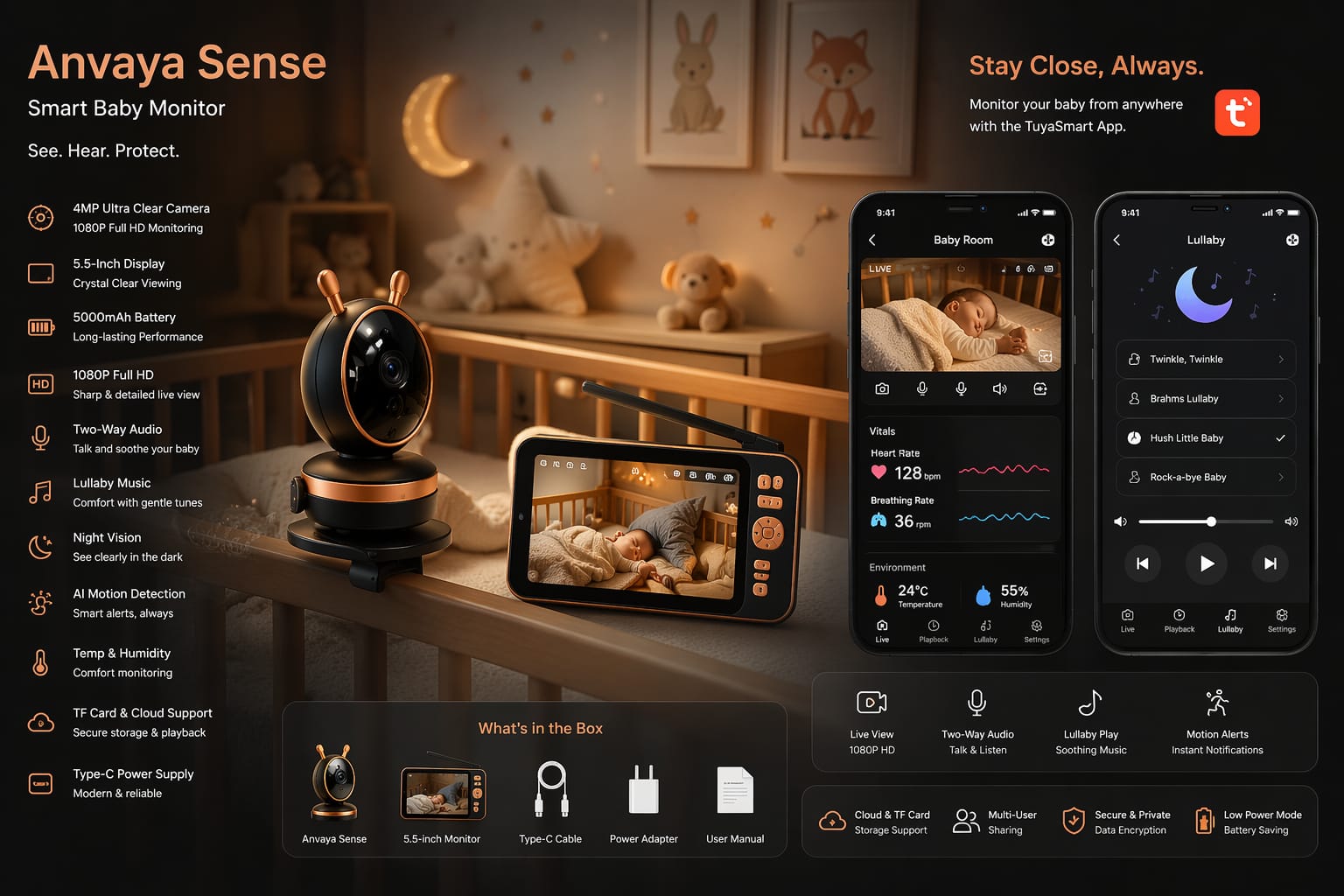
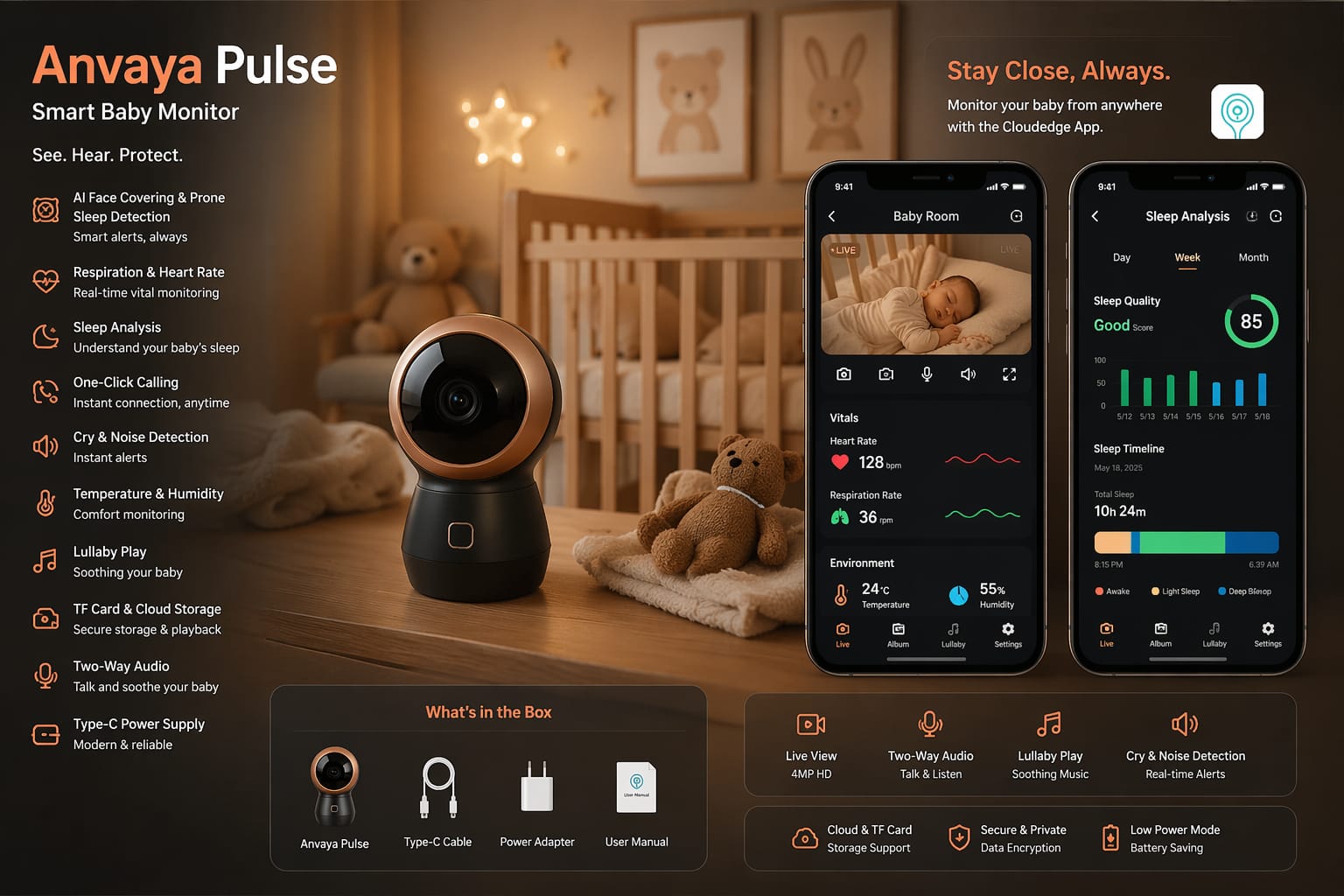
Anvaya Smart SENSE monitors SpO2 contactlessly from beside the crib. No clip. No sock. No wearable. Just a reading, all night, with an alert if it drops. Built for India โ€” with India warranty and free shipping.
See Anvaya Smart SENSE โ†’

Monitor your baby with Anvaya Smart

India's only contactless AI baby monitor. Breathing, SpO2, cry analysis, sleep tracking. Starting โ‚น8,999.

Get Early Access โ€” Save โ‚น7,000
Safe for newborns
No radiation, no lights
IIT Research backed
Academic partnership
47 beta families
Real-world tested
AAP aligned
Infant safety guidelines

About the Author

Anvaya Smart Team
Baby Wellness Researchers ยท IIT Research Partners

A team of engineers and parents who built Anvaya Smart after experiencing first-hand the anxiety of monitoring a newborn. 7+ years in AI sensing systems. IIT research partnerships.

IIT ResearchAI Sensing Experts

Related Articles