🧠 You know that gut feeling at 3am? AI is that — but it never sleeps
Every experienced parent develops a sixth sense. They can tell a hungry cry from a tired cry without thinking. They hear a change in breathing before they can explain why. They just know when something is off.
That sixth sense takes months — sometimes years — to develop. And it only works if you're awake.
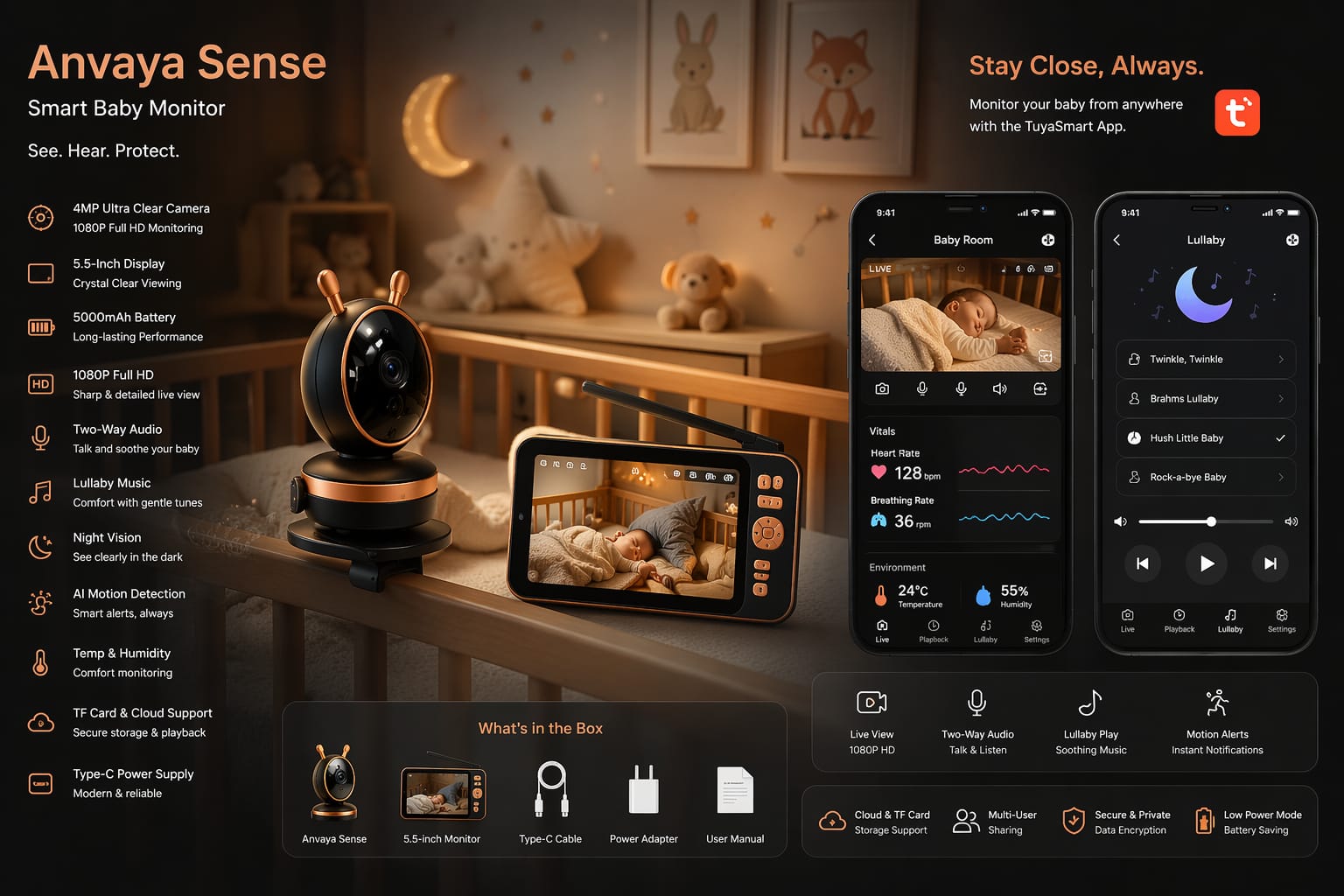
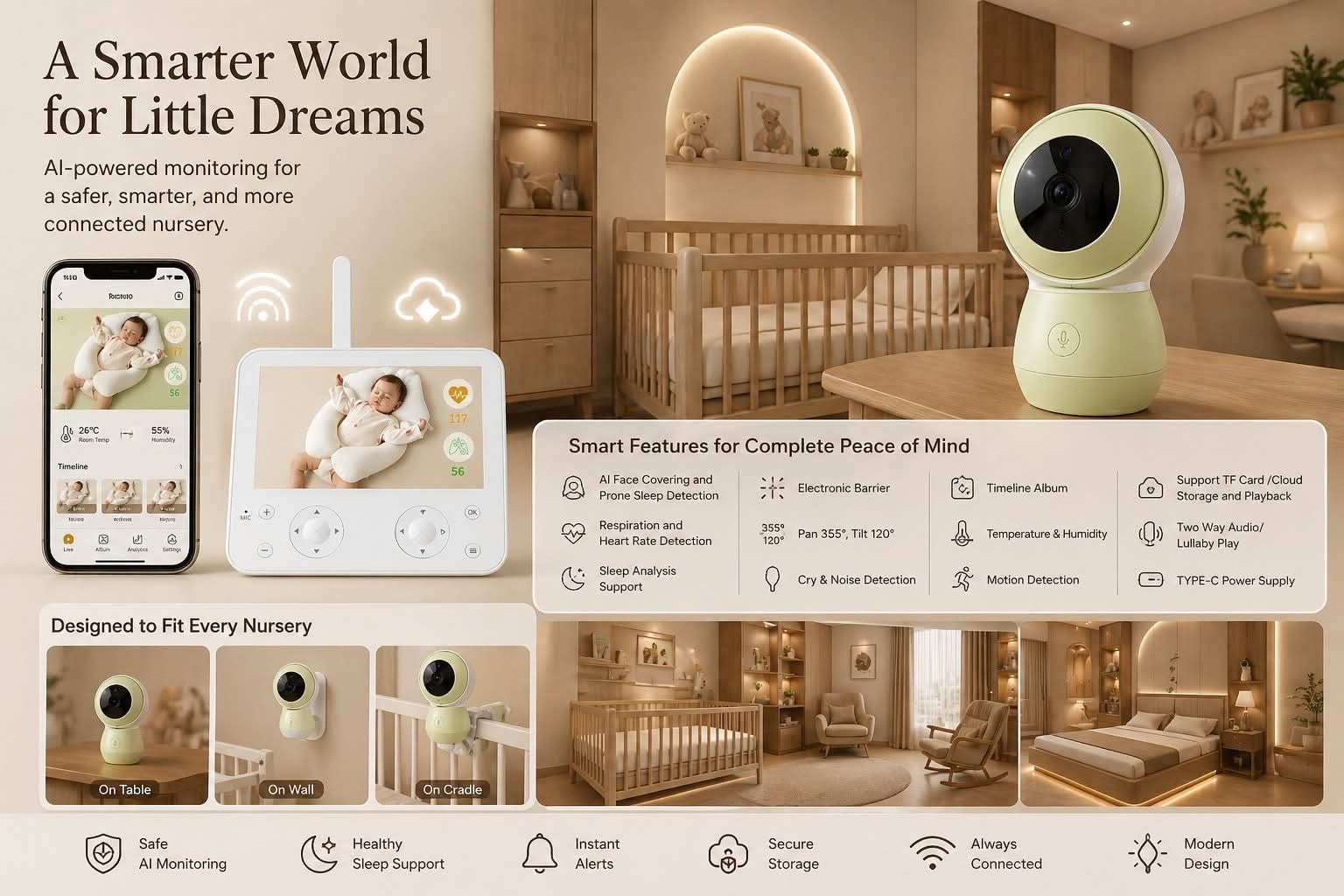
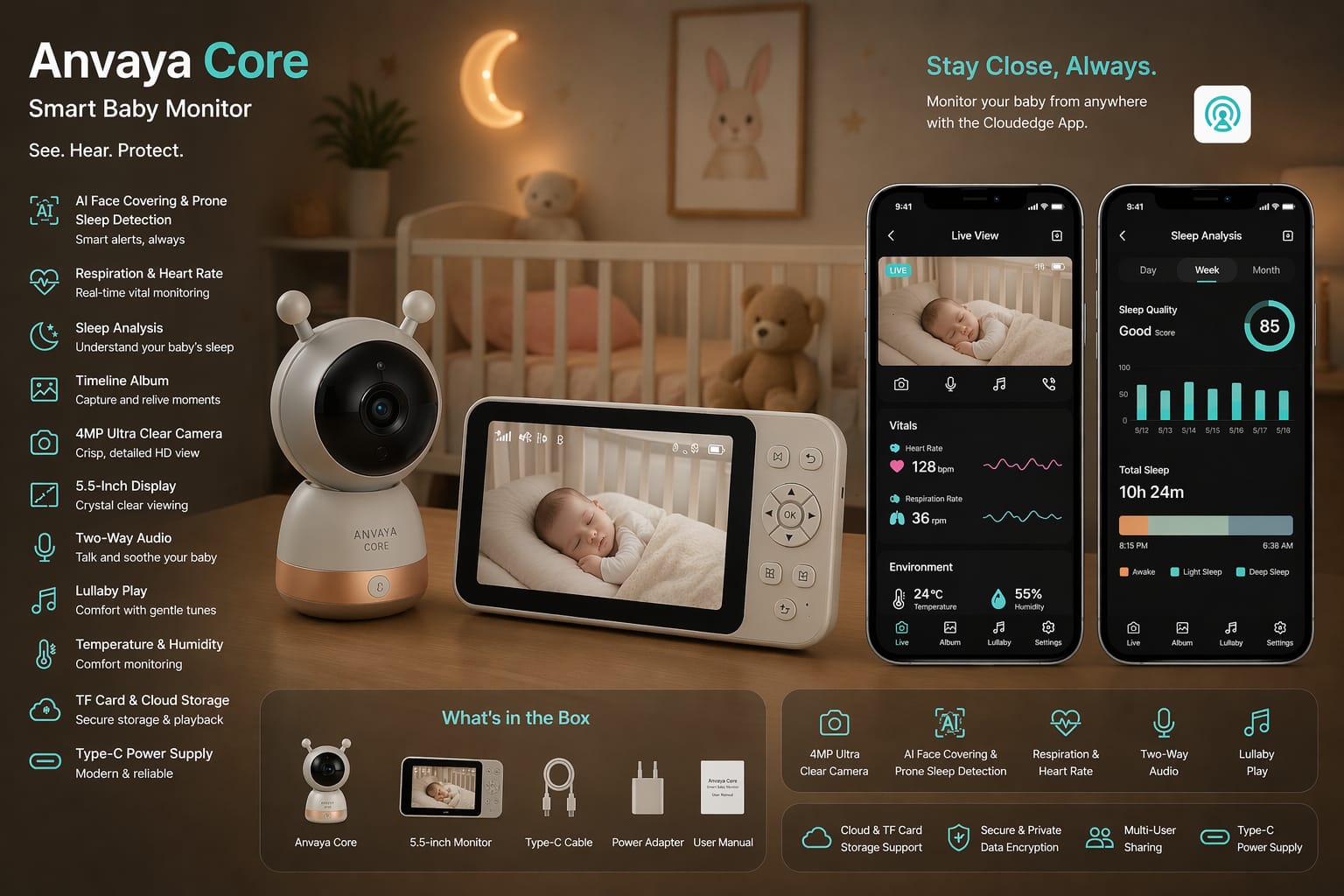
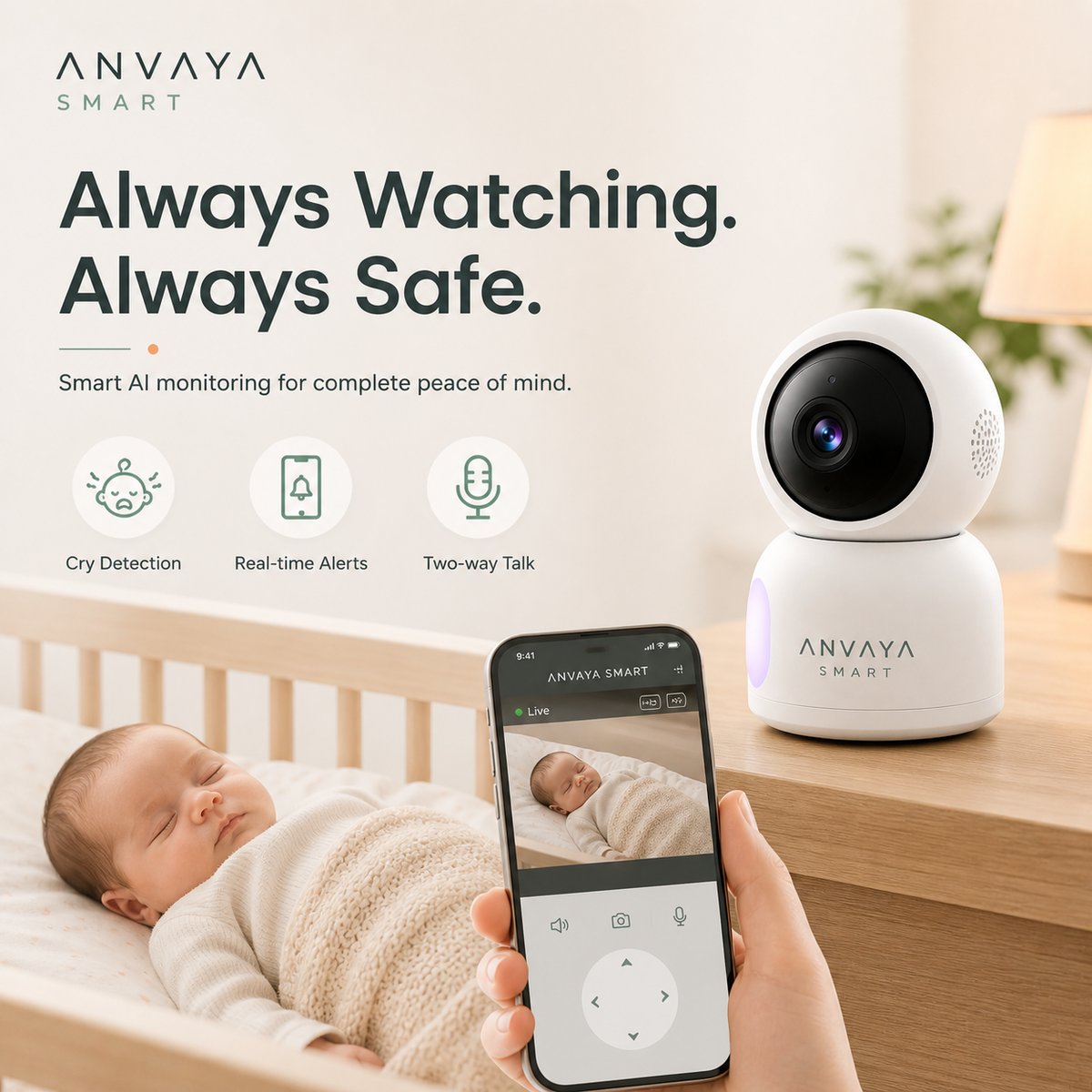
That's what an AI baby monitor does. It learns your baby's patterns. It watches all night, every night. And it alerts you when something actually needs your attention — not every time your baby squirms or makes a noise.
In 2026, AI baby monitors available in India can do three things that a regular video monitor simply cannot:
😢 Thing 1: It knows what your baby's cry means
Your baby has been crying for 4 minutes. Is it hunger? Is it pain? Is it just the "I want to be held" cry that can wait 2 minutes while you finish peeing?
These cries sound different. Not dramatically different — but different enough that a trained ear (or a trained AI) can tell them apart.
An AI cry analyzer has heard millions of baby cries, all labelled by what the baby actually needed. It knows a hungry cry has a rhythmic "neh neh neh" pattern. It knows a pain cry is sudden, sharp, and has a brief silence before it screams again. It knows a tired cry is whiny and nasal, not urgent.
After 3 nights with your baby, it learns your baby's version of each cry — because no two babies sound exactly the same. By week 2, it knows your baby better than most visitors do.
What this means for you at 3am: Your phone buzzes. "Hungry cry — last fed 3 hours ago." You grab a feed. Done. No guessing, no spiral of anxiety, back to sleep in 15 minutes.
🫁 Thing 2: It can tell if your baby is breathing — without touching them
This one surprises people. How can a device across the room know your baby is breathing?
Think of bats and echolocation. A bat sends out a tiny sound wave, it bounces off objects, and the bat uses the echo to know where things are. An AI baby monitor does something similar — but with a very gentle radar signal instead of sound.
This signal bounces off your baby's chest. Every time your baby breathes in, the chest rises a tiny bit. The radar picks up that movement — even through a blanket, even in complete darkness — and calculates exactly how fast your baby is breathing.
No clip on the finger. No band around the chest. No sock on the foot. Your baby doesn't even know it's happening.
What this means for you: You know your baby is breathing right now. Not because you can see them on a grainy camera — but because a number on your phone says 42 breaths per minute. Steady. Normal. Go back to sleep.
📅 Thing 3: It gets smarter the longer you use it
A regular baby monitor shows you the same thing on day 1 as it does on day 100.
An AI monitor is different. It builds a picture of your baby's normal over time.
Your baby normally sleeps 11 hours with 4–5 sleep cycles. Tonight they've only done 2 cycles and keep waking. That's unusual for your baby — not just unusual in general. The AI knows the difference.
Your baby normally breathes 38 times per minute during deep sleep. Tonight it's 52, consistently. That's elevated for your baby. Alert sent.
This personalisation is what separates an AI monitor from a smart device that's just collecting numbers. The numbers only mean something if you know what's normal for that specific baby.
🇮🇳 Why this matters more in India than most countries
| Indian reality | How AI monitoring helps |
|---|---|
| 🌡️ Heat makes wearables fall off and cause rashes | AI monitoring needs nothing on the baby's skin |
| ⚡ Power cuts mean internet goes down | On-device AI keeps monitoring even offline |
| 👨👩👦 Joint families — grandparents often watching baby | Alerts go to your phone wherever you are |
| 😰 New parent anxiety is real and exhausting | AI gives context: "normal periodic breathing" not just an alarm |
| 🏥 Paediatrician visits are infrequent | AI generates health reports you can share at your next visit |
🆚 AI monitor vs regular monitor — what actually changes
| Situation | Regular video monitor | AI monitor |
|---|---|---|
| Baby grunts in sleep | You wake up, check camera, try to go back to sleep | Nothing — AI knows grunting is normal for your baby |
| Baby's breathing slows | You don't know until you physically check | Alert on your phone before it becomes a problem |
| Baby cries at 2am | You run in, guess, try feeding, try rocking | "Tired cry — awake 90 min, try putting down drowsy" |
| Baby has a bad night | You know it was bad because you were up 5 times | Sleep report: 2 complete cycles vs. usual 5 — share with paediatrician |
| Power cut at 3am | Monitor goes offline | On-device AI keeps running |
🤔 "But is it safe? What about radiation?"
Fair question — and a very Indian parent question (we've heard this from every family).
The radar in an AI breathing monitor operates at power levels measured in microwatts. For comparison: your WiFi router uses about 100,000 microwatts. Your mobile phone during a call uses millions of microwatts. The radar in a baby monitor is thousands of times weaker than either.
It's non-ionising radiation — same category as visible light and radio waves. It does not heat tissue. It does not pass through the body. It bounces off the surface. International safety standards allow levels far, far higher than what these devices emit.
Short version: it is safe. If anyone tells you otherwise, ask them to compare it to the WiFi router that's been in your bedroom for years.
🤔 "Does it replace a paediatrician?"
No. Full stop.
An AI monitor is a continuous home monitoring tool — like a thermometer, but for breathing and sleep. It gives you information. A doctor interprets what that information means for your baby's specific health situation.
The most useful thing an AI monitor does for your paediatrician: it generates a health report you can actually show them. Instead of "she seemed to breathe funny on Tuesday," you can show a graph. That's real.
Want to understand the specific sensors? See our guide on contactless baby breathing monitors. Ready to compare options? See best baby monitor India 2026.
Monitor your baby with Anvaya Smart
India's only contactless AI baby monitor. Breathing, SpO2, cry analysis, sleep tracking. Starting ₹8,999.
Get Early Access — Save ₹7,000About the Author
A team of engineers and parents who built Anvaya Smart after experiencing first-hand the anxiety of monitoring a newborn. 7+ years in AI sensing systems. IIT research partnerships.