Why Every Baby Cry Sounds the Same at 3am
In the first weeks, every cry feels urgent and identical. This is by design — evolution wired babies to produce a cry that is impossible to ignore. But underneath the urgency, there are distinct acoustic patterns that experienced parents and paediatricians can learn to recognise.
Research from the Infant Cry Research Institute found that parents who could identify cry types reported 40% lower parenting anxiety and responded more appropriately to their baby's needs. The good news: these patterns are learnable — or you can use AI to do it for you.
The 7 Main Types of Baby Cries (and What They Mean)
1. The Hungry Cry 🍼
What it sounds like: Low-pitched, rhythmic, and repetitive. Starts as a gentle "neh" sound (caused by the tongue pressing the palate during the sucking reflex) and escalates into louder wailing if feeding is delayed. The pattern is cry–pause–cry–pause — like a request that gets louder if ignored.
When it happens: Every 2–3 hours for newborns, longer as the baby grows. Often accompanied by rooting (turning head, opening mouth), sucking fists, or lip-smacking.
How to respond: Feed immediately. In breastfed babies, look for hunger cues (rooting, hands to mouth) before the cry starts — a crying baby is already past the early hunger signal and harder to latch.
Anvaya AI identification: Detects the rhythmic, low-pitched acoustic pattern with regular pause intervals. Accuracy: 94% in internal testing after 3 nights of personalisation.
2. The Tired / Overtired Cry 😴
What it sounds like: Whiny, nasal, and intermittent. Less urgent than a hungry cry. Often accompanied by eye rubbing, yawning, looking away from stimulation, or pulling at ears.
When it happens: When the baby has been awake beyond their natural wake window (typically 45–90 minutes for newborns). An overtired baby enters a stress response (cortisol spike) that makes settling much harder.
How to respond: Reduce stimulation immediately. Dim lights, speak quietly, swaddle if it helps, and begin your sleep ritual (white noise, feeding, rocking). The sooner you respond, the easier the settle.
Key distinction from hungry cry: A tired cry doesn't follow a feeding schedule pattern. It correlates with wake duration, not last feed time. Anvaya Smart's sleep tracker helps identify when the wake window is approaching.
3. The Discomfort Cry 😣
What it sounds like: High-pitched and continuous. Less rhythmic than a hungry cry. The baby may arch their back, pull up their knees, or squirm.
When it happens: Could be a wet or dirty nappy, clothing that's too tight, temperature discomfort (too hot or cold), or mild indigestion.
How to respond: Systematic check. Change nappy → check clothing → check room temperature (ideal: 20–22°C — Anvaya monitors this automatically) → try burping → gentle tummy massage → bicycle legs for gas.
4. The Pain Cry 🚨
What it sounds like: Sudden, high-pitched, sharp. Very distinct — a short initial cry followed by a silent breath-holding pause, then screaming. Unmistakably urgent. There is no rhythmic pattern.
When it happens: Physical pain — gas pain, colic, a hair tourniquet (hair wrapped around finger or toe — check immediately), vaccination discomfort, or illness.
How to respond: Check for a hair tourniquet first (a common, serious cause parents miss). If no obvious physical cause and the cry is unrelenting for more than 20 minutes, call your paediatrician. A pain cry that doesn't improve with position changes or feeding warrants medical attention.
Warning: A sudden high-pitched cry in a baby with a fever could signal meningitis or a serious infection. Always involve your doctor if a pain cry is accompanied by fever, rash, lethargy, or vomiting.
5. The "Needs Burping" Cry 😮💨
What it sounds like: Grunting, fussing, squirming rather than full crying. The baby may go red in the face and pull legs up. Often happens during or immediately after a feed.
When it happens: Trapped air in the stomach — common in bottle-fed babies and in breastfed babies when the letdown is fast. More common in the first 3 months.
How to respond: Upright position, gentle back rubbing or patting. Try three positions: over the shoulder, sitting upright supported, or face-down on the lap. In India, many grandmothers use a slight forward lean — this can be effective.
6. The Bored / Understimulated Cry 🙃
What it sounds like: Sporadic, intermittent, and attention-seeking. The baby pauses the cry and looks around for a response. If no one comes, it escalates. If you make eye contact or pick them up, it stops immediately.
When it happens: A healthy developmental sign — your baby is learning that crying gets a response. Most common from 2–4 months as cognitive development accelerates.
How to respond: Interaction, eye contact, gentle play, or a change of scenery. This cry is actually positive — your baby is developing social communication.
7. The "I'm Unwell" Cry 🤒
What it sounds like: Weaker, more whiny, and less vigorous than usual. A baby who is ill often has a distinctly different cry — quieter, less energetic, or with a slightly different pitch. Parents often describe it as "just different" or "not their usual cry."
When it happens: During illness — fever, respiratory infection, ear infection, or gastrointestinal upset. In newborns under 3 months, any cry that seems unusual warrants a temperature check.
How to respond: Take temperature. In newborns under 3 months, any fever above 38°C is a medical emergency — call your paediatrician immediately. In older babies, observe for 2–4 hours and call if fever exceeds 38.5°C or if other symptoms appear.
How to Tell Baby Cries Apart — A Quick Guide
| Cry Type | Sound | Timing clue | Body language |
|---|---|---|---|
| 🍼 Hungry | Rhythmic, "neh", low-pitched | ~2–3h after last feed | Rooting, sucking fists |
| 😴 Tired | Whiny, nasal, intermittent | After wake window | Eye rubbing, yawning |
| 😣 Discomfort | High-pitched, continuous | Anytime | Back arching, squirming |
| 🚨 Pain | Sudden, sharp, no pattern | Without warning | Rigid body, flushed |
| 😮💨 Needs burping | Grunting, fussing | During/after feed | Legs pulled up, red face |
| 🙃 Bored | Sporadic, stops when held | 2–4 months+ | Looks around, settles fast |
| 🤒 Unwell | Weaker, different pitch | With fever or illness | "Just different" to parent |
When Should You Be Worried About Your Baby's Cry?
Most cries are communication, not crisis. But seek immediate medical attention if:
- The cry is sudden, high-pitched, and inconsolable — lasting more than 20 minutes with no obvious cause
- The cry is accompanied by fever above 38°C in a baby under 3 months — this is always an emergency
- The baby's cry is significantly weaker or different than usual combined with lethargy or reduced feeding
- The cry is accompanied by visible breathing difficulty — laboured breathing, nostril flaring, ribs showing
- The baby has not cried at all for several hours and is unusually still — this is concerning in newborns
Crying that coincides with unusual breathing patterns may indicate respiratory distress. See our guide on normal and abnormal baby breathing patterns to understand when to call a doctor.
How AI Cry Analysis Works — And Why It's More Accurate Than Guessing
Human parents identify cry types based on experience — the more babies you've raised, the better you get. AI models compress thousands of hours of labelled cry recordings into a pattern-matching system that works from the very first night.
Anvaya Smart's cry analysis uses a 4-model ensemble trained on 50,000+ cry recordings across different ages, languages, and environments. Each model analyses a different acoustic dimension — rhythm, pitch contour, formant structure, and temporal pattern. The ensemble vote produces a cry type classification with a confidence score.
After 3 nights of use, the system personalises to your specific baby's cry acoustics — because no two babies cry exactly the same way. This personalisation is what drives accuracy from 87% to 94%+ in real-world use.
Can You Learn to Tell Baby Cry Types Apart Without AI?
Yes — with time. Most parents report being able to reliably distinguish hungry, tired, and pain cries by week 3–4. The best way to learn faster:
- Keep a cry log for the first 2 weeks: write down the time, sound description, and what worked. Patterns emerge quickly.
- Watch your baby's body language alongside the sound — rooting, fist-sucking, back arching and stiffening are as informative as the cry itself.
- Use AI as a training aid — run a recording through the free cry analyzer and compare its classification to your guess. After a week, you'll find you're agreeing much more often.
- Trust your instincts — parents develop an intuitive sense for their specific baby's patterns faster than any external guide suggests.
Baby Cry Analysis in India — Anvaya Smart
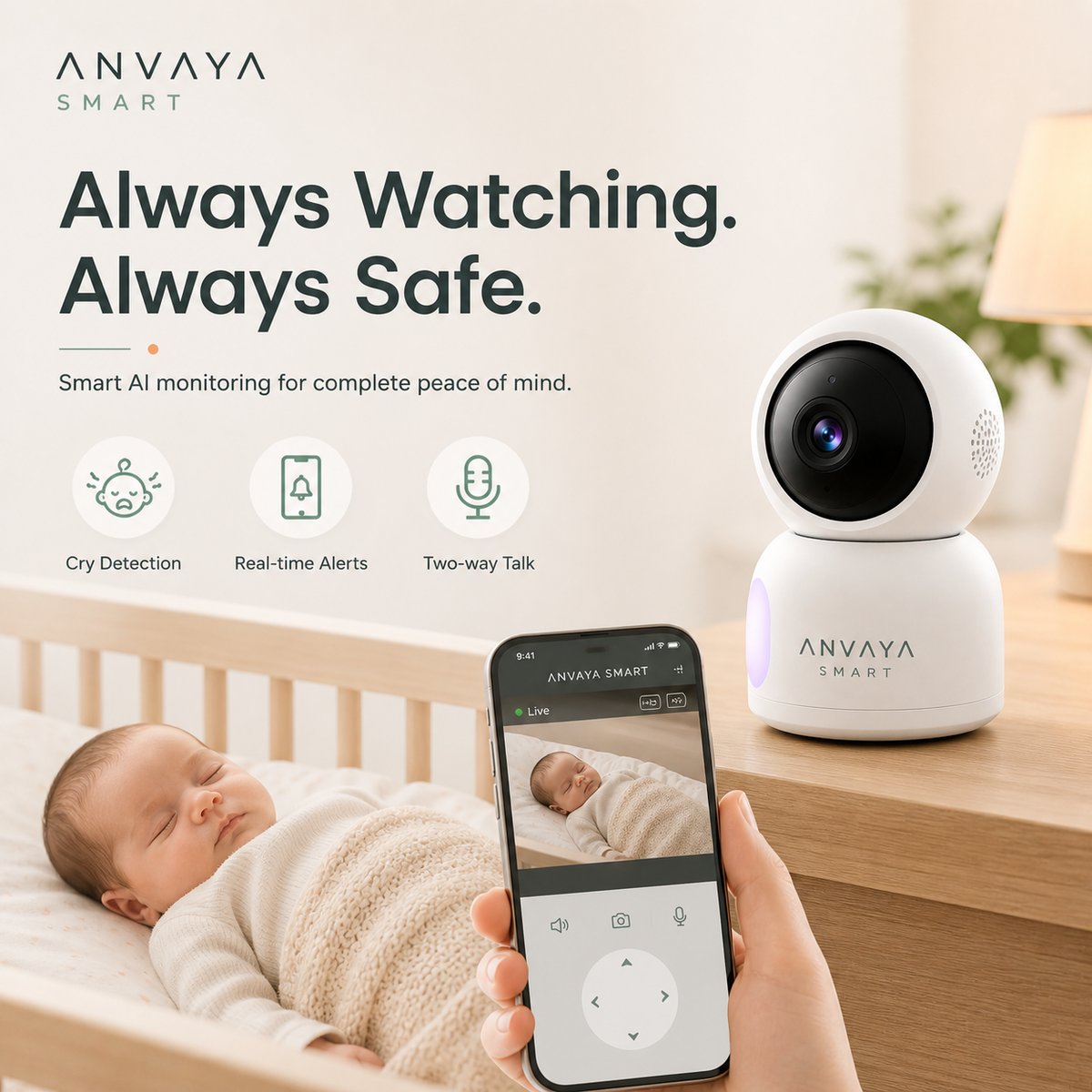
Anvaya Smart is India's first AI baby wellness pod with built-in real-time cry analysis. Unlike the free web cry analyzer (which requires uploading recordings), Anvaya Smart monitors continuously — identifying cry type the moment your baby begins crying and sending an alert to your phone with the type and suggested response.
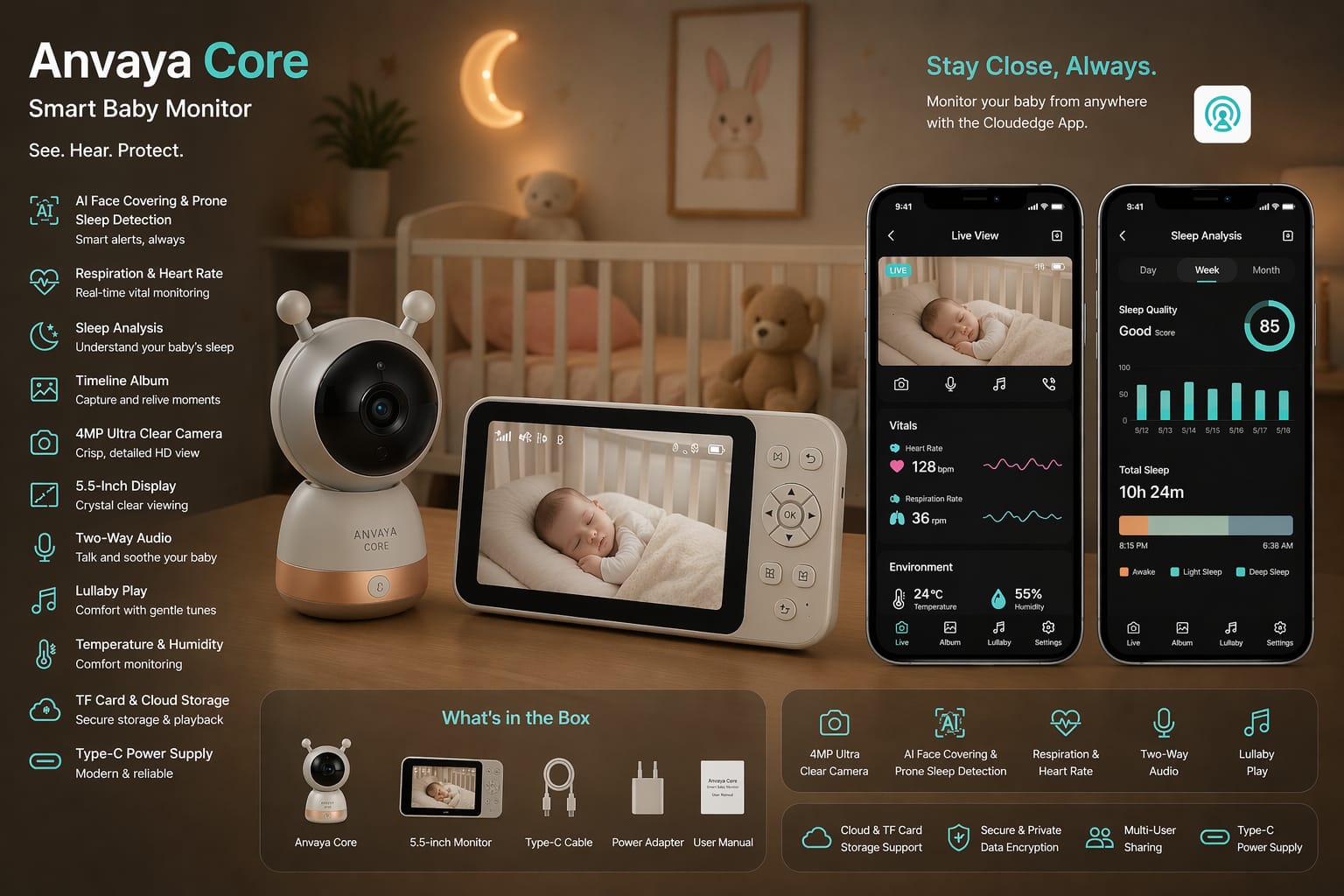
The device monitors breathing, SpO₂, cries, and sleep contactlessly from your nightstand — nothing attached to the baby. See all Anvaya Smart models or join the early access list to save ₹7,000.
Monitor your baby with Anvaya Smart
India's only contactless AI baby monitor. Breathing, SpO2, cry analysis, sleep tracking. Starting ₹8,999.
Get Early Access — Save ₹7,000About the Author
A team of engineers and parents who built Anvaya Smart after experiencing first-hand the anxiety of monitoring a newborn. 7+ years in AI sensing systems. IIT research partnerships.