🌟 Why baby health monitoring matters most in the first 6 months
The first six months of a baby's life are the most medically significant period outside of hospital care. During this window:
- The brainstem's breathing control centre is still maturing
- SpO2 regulation is less stable, especially during illness or heat exposure
- SIDS risk is at its lifetime peak (2–4 months)
- Parents are sleep-deprived and may miss subtle warning signs
- Temperature dysregulation is common — babies cannot sweat or shiver effectively
In India, these risks are compounded by summer heat (35–45°C), infrastructure variation (power cuts, humidity swings), and limited access to 24/7 paediatric advice outside major cities.
This guide covers what to monitor, what is normal, what is not, and how technology — when used correctly — can give Indian parents genuine peace of mind.
🫁 1. Breathing monitoring — the most critical vital sign
Breathing is the vital sign most parents watch most anxiously — and for good reason. Breathing irregularities in newborns are common, often normal, but occasionally serious.
What is normal: 40–60 breaths per minute in newborns. Fast, irregular, with 5–10 second pauses (periodic breathing). All normal.
What is not normal: Pauses over 20 seconds, rate consistently above 60 or below 20, blue lips or fingertips, nostrils flaring with every breath, ribs visibly pulling inward.
When to monitor: Every night for the first 6 months. The 2–4am window is highest risk because sleep is deepest and parents are least likely to check.
→ Full guide: Baby Breathing Patterns — What's Normal and What's Not
→ Full guide: Baby Breathing Monitors Without Wearables — India Guide
💉 2. SpO2 monitoring — oxygen in the blood
SpO2 (oxygen saturation) measures the percentage of haemoglobin carrying oxygen. It is the single most direct indicator of whether your baby's lungs and heart are doing their job.
Normal range: 95–100% in healthy infants. Below 94% for more than a few minutes warrants immediate attention.
When SpO2 drops in Indian babies: During respiratory illness, in high altitudes (Shimla, Ladakh, Manali), in severe heat causing dehydration, and in premature babies whose lungs haven't fully matured.
How it's measured: Traditional pulse oximeters use a clip or sock on the baby's finger or foot (wearable). Newer contactless systems use optical sensing from a distance — more practical in India's heat.
→ Full guide: Baby SpO2 Monitoring — What Indian Parents Need to Know
😢 3. Cry analysis — what your baby is actually saying
Babies have a limited communication toolkit: crying. But not all cries are the same. Research has identified distinct acoustic patterns in infant cries that correlate with specific needs and states.
The 5 main cry types:
- 😋 Hunger cry: Rhythmic, repetitive, builds gradually
- 😫 Tired cry: Whiny, low-pitched, accompanied by eye rubbing
- 😣 Pain cry: Sudden, high-pitched, with a long pause then repetition
- 😤 Discomfort cry: Continuous, irritable — usually gas, position, temperature
- 😰 Overstimulation cry: Fussy, turns away, inconsolable in noisy environments
AI systems trained on millions of cry samples can now identify these patterns with 85–92% accuracy — giving exhausted parents at 3am a starting point rather than guesswork.
→ Full guide: Types of Baby Cries and What They Mean
😴 4. Sleep monitoring — the foundation of baby health
Baby sleep is not just about duration — it's about cycle quality, arousal responses, and environment. Poor sleep environment is a direct SIDS risk factor (overheating, soft surfaces) and affects brain development.
What matters to monitor: Total sleep duration, sleep cycle length, sleep environment temperature, position changes, and whether baby can settle back into sleep independently.
India context: The 4-month sleep regression hits Indian families hard because most have been successfully managing baby sleep with rocking, feeding, or co-sleeping — crutches the regression makes permanent without guidance.
→ Full guide: Baby Sleep Guide India — From Newborn to 12 Months
🌡️ 5. Temperature monitoring — underrated and critical in India
Babies cannot regulate body temperature effectively for the first few months. In India's climate extremes, this is more dangerous than in temperate countries.
Overheating risk: Room above 25°C during sleep significantly increases SIDS risk. In Indian summers, rooms can hit 32–38°C without AC.
What to monitor: Ambient room temperature (not just skin temperature). Target 20–22°C during sleep. Alert parents if temperature rises above 26°C.
→ Full guide: SIDS Prevention India — What Every Parent Must Know
📊 Which monitoring approach is right for your situation?
| Your situation | Priority monitoring | Recommended approach |
|---|---|---|
| Healthy full-term baby, typical home | Breathing + temperature | Contactless breathing monitor with temp sensor |
| Premature baby or NICU history | SpO2 + breathing + HR | Medical grade monitoring + paediatrician guidance |
| Baby with respiratory illness | SpO2 + breathing rate | Contactless SpO2 monitor; call paediatrician if SpO2 below 94% |
| Parent with high anxiety | Comprehensive + cry | Full-featured smart monitor — reduces check-in frequency and improves parental sleep |
| Hot climate, no AC | Temperature + breathing | Monitor with ambient temp alerts; prioritise room cooling |
🛒 What to look for in a baby health monitor for India
- ✅ Works offline: Power cuts and internet outages are common in India. On-device AI processing means monitoring continues without internet.
- ✅ Contactless: Wearable sensors cause rashes in India's heat, fall off sweaty feet, and trigger false alarms. Contactless radar monitoring has no skin contact.
- ✅ India warranty: Most global brands (Owlet, Nanit) have no India warranty. Look for local support and warranty.
- ✅ Temperature monitoring included: Critical for India's climate. Know when your baby's room gets too warm.
- ✅ No monthly subscription: Many imported monitors lock full features behind ₹2,000–3,500/month subscriptions.
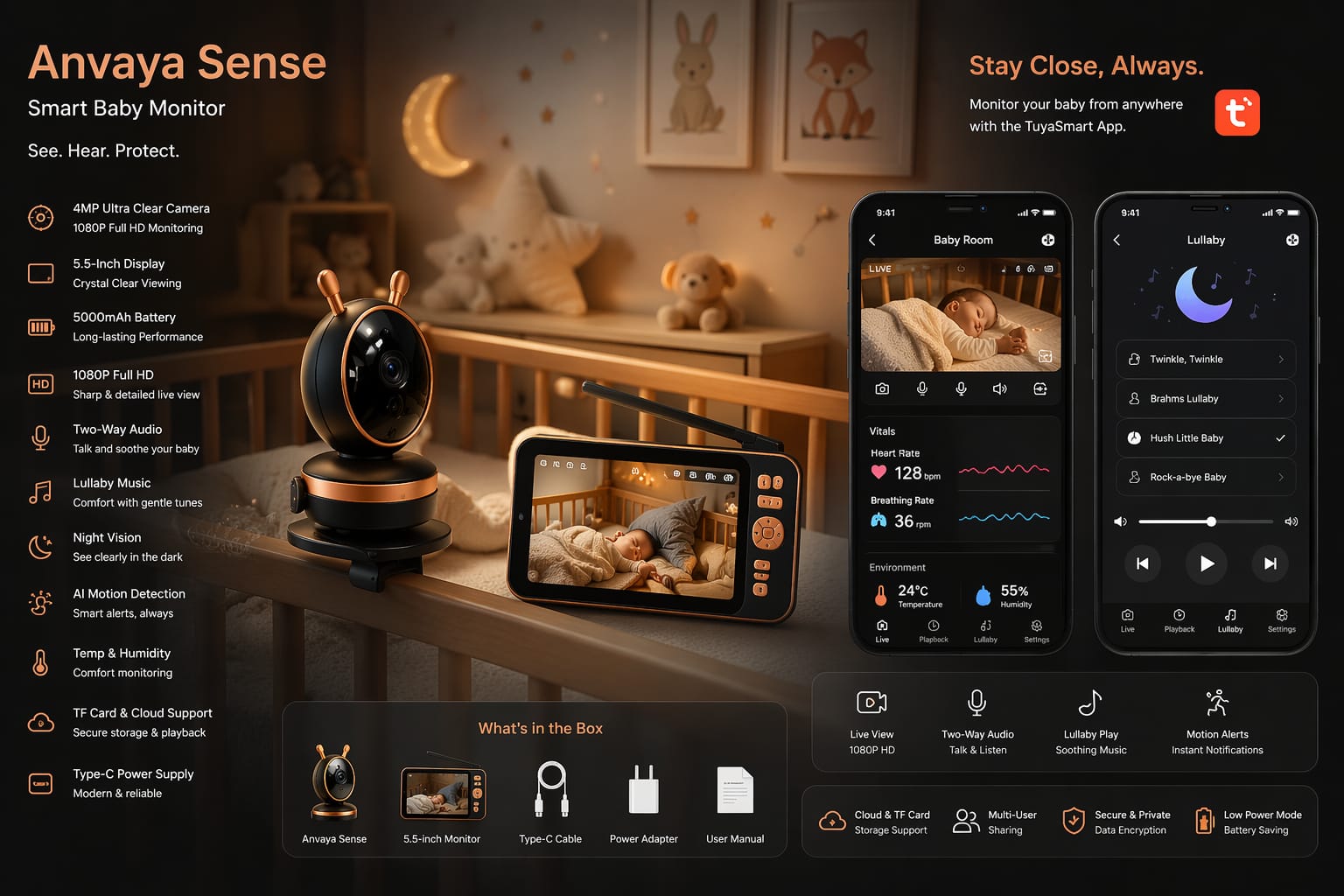
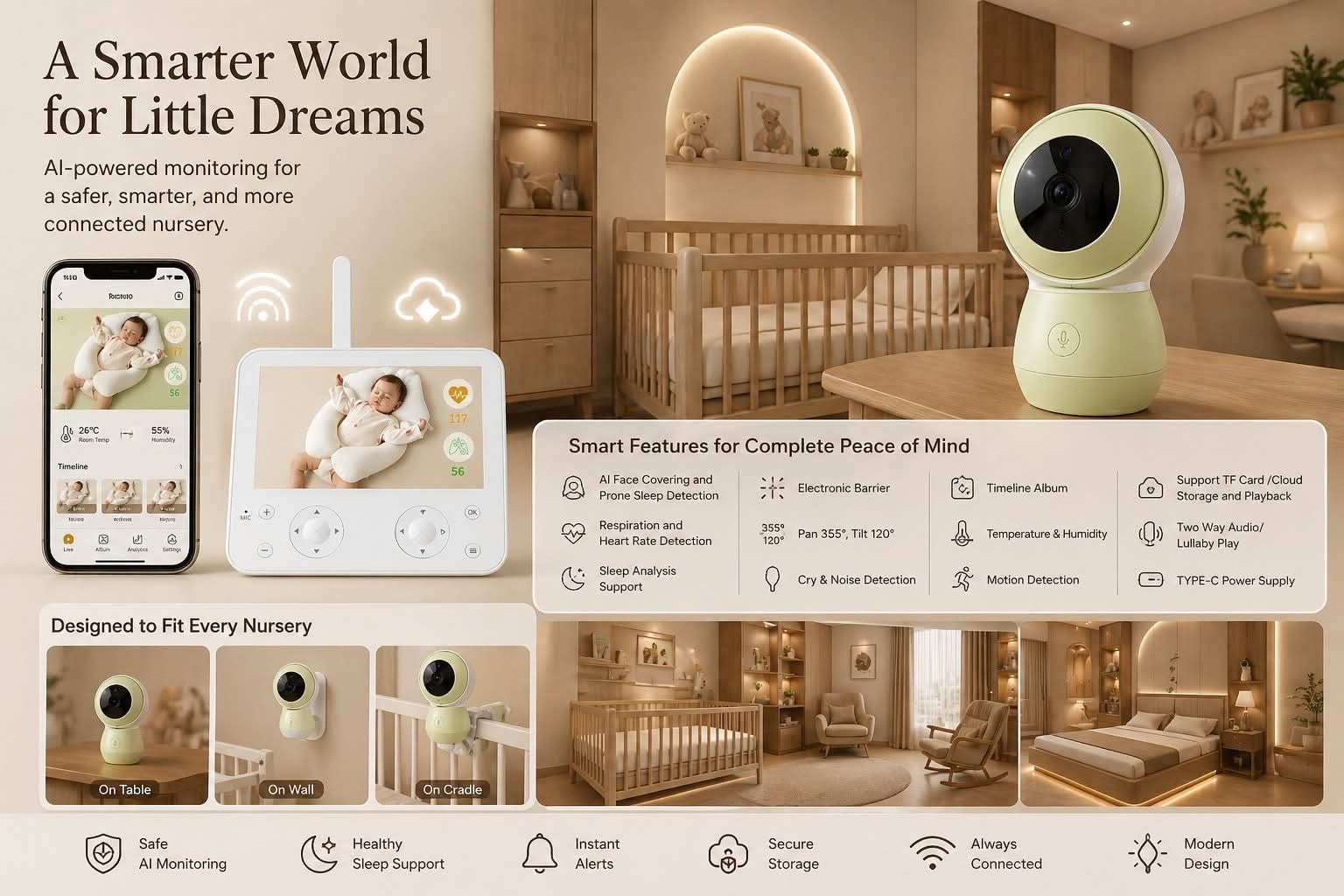
Monitor your baby with Anvaya Smart
India's only contactless AI baby monitor. Breathing, SpO2, cry analysis, sleep tracking. Starting ₹8,999.
Get Early Access — Save ₹7,000About the Author
A team of engineers and parents who built Anvaya Smart after experiencing first-hand the anxiety of monitoring a newborn. 7+ years in AI sensing systems. IIT research partnerships.